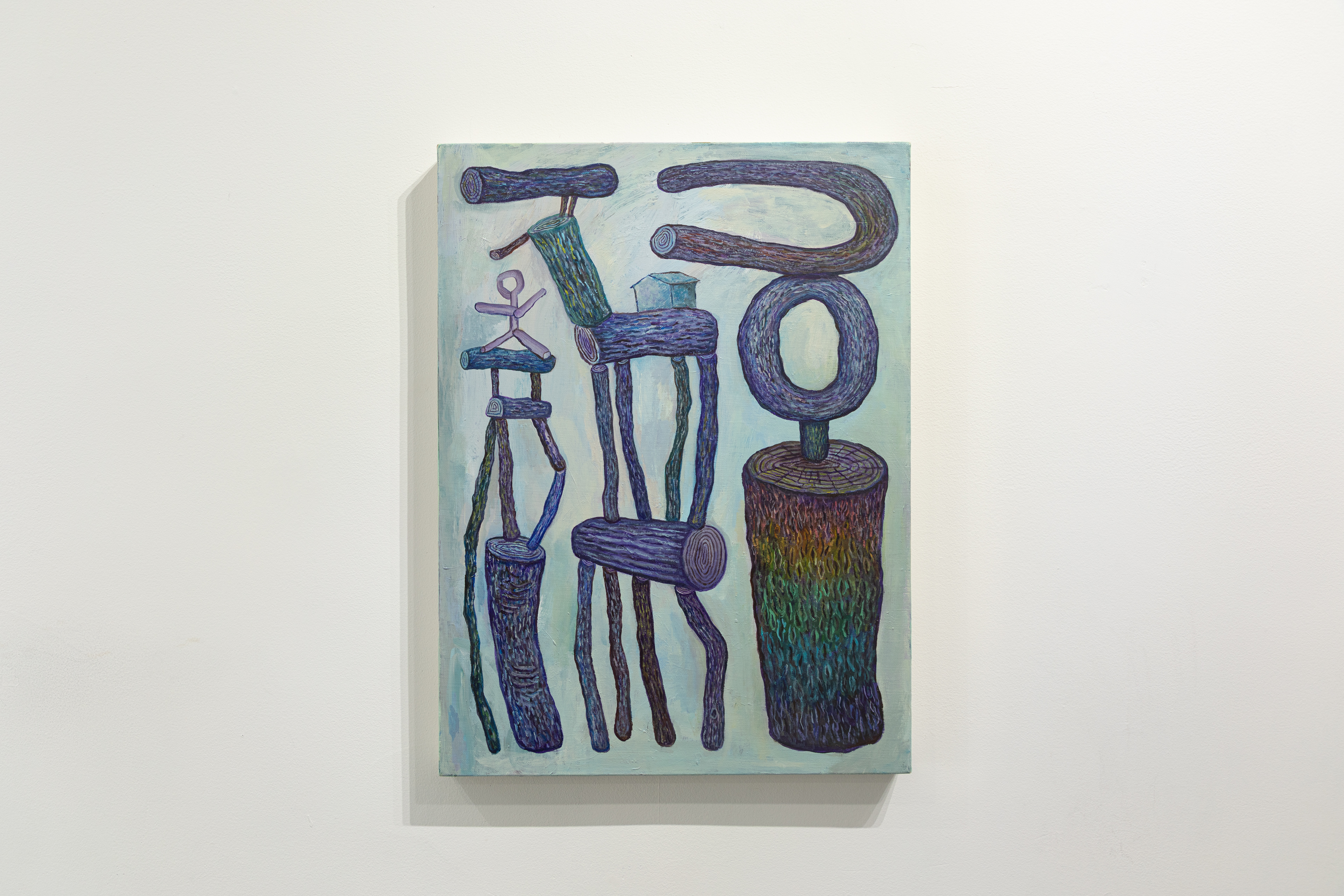
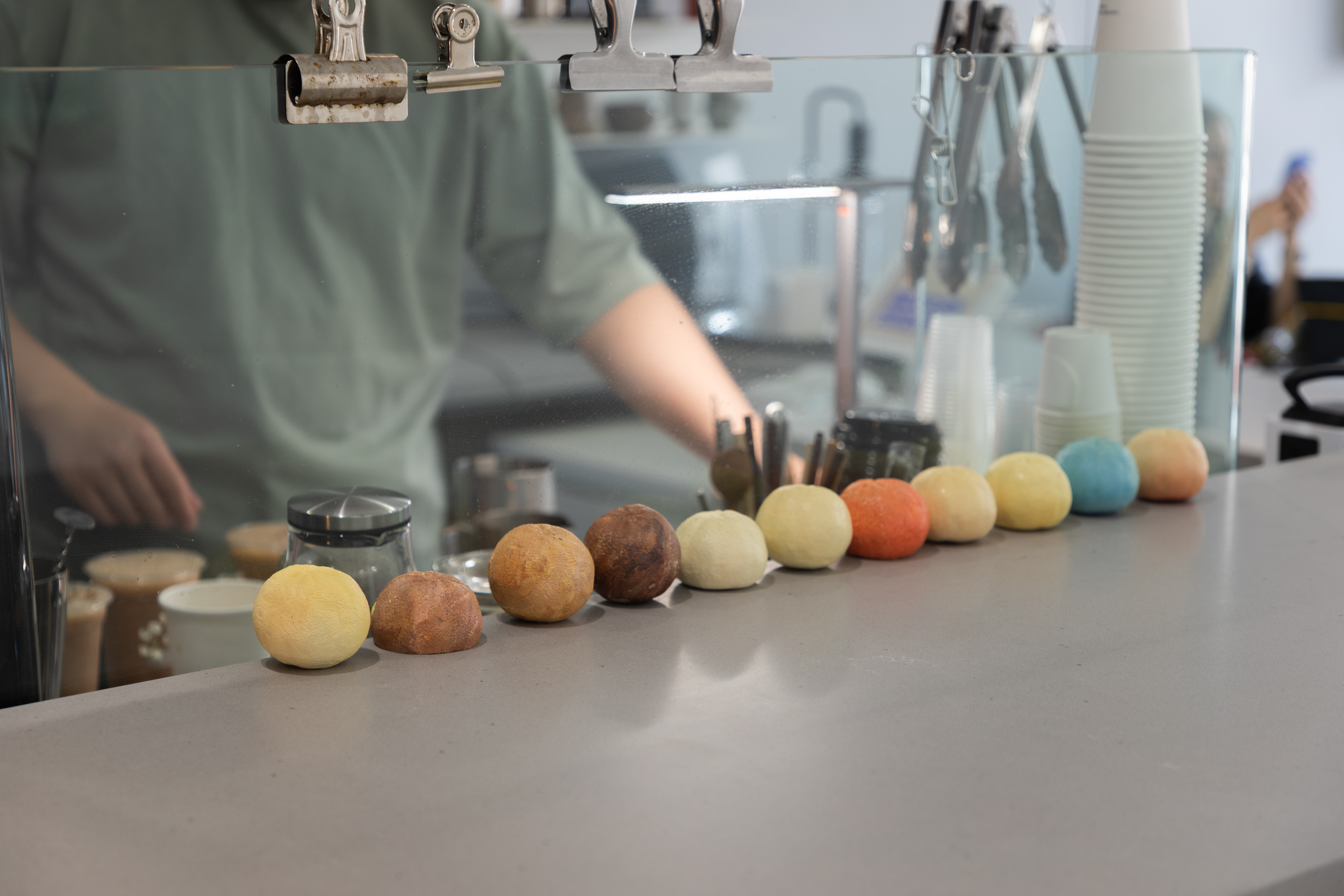
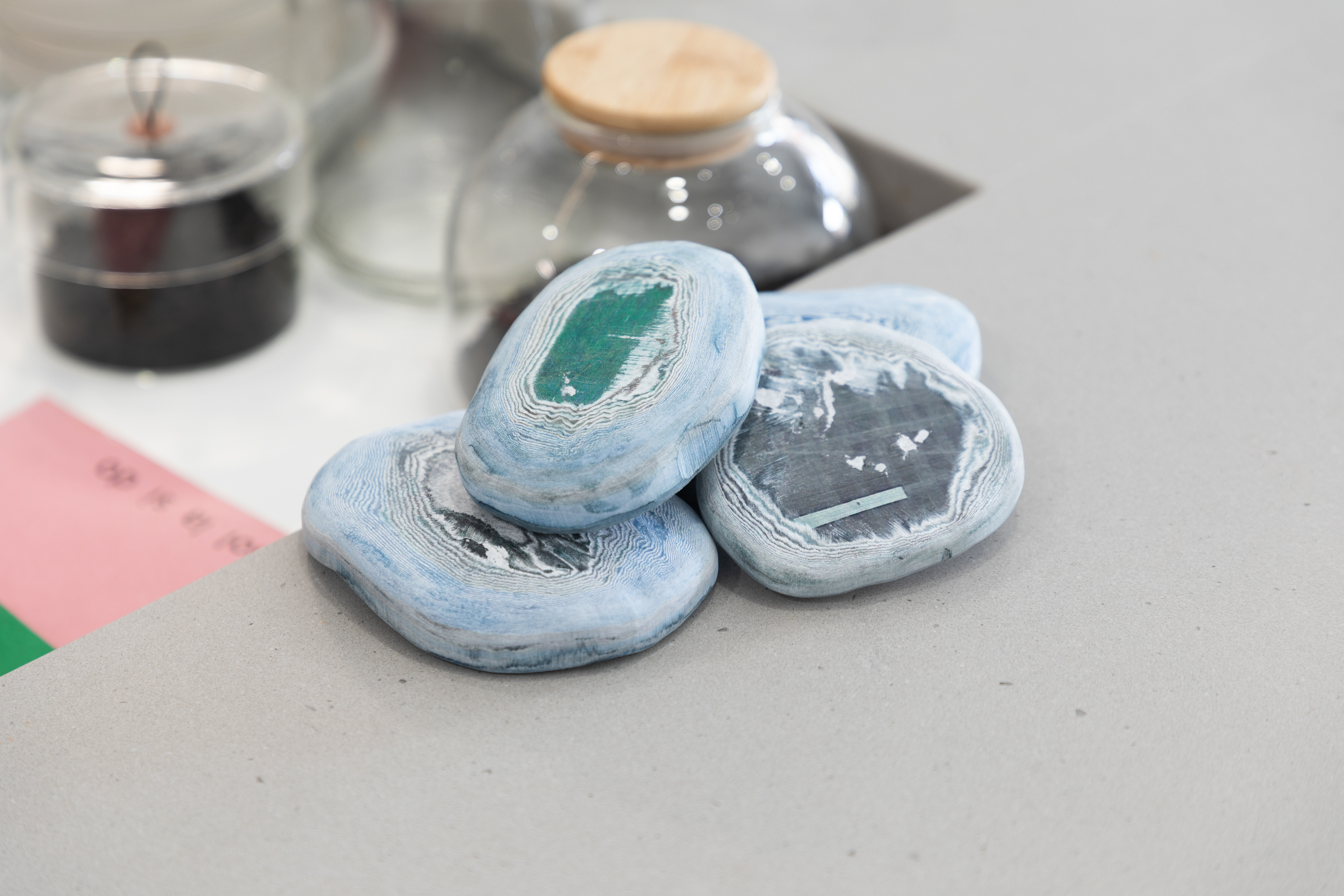
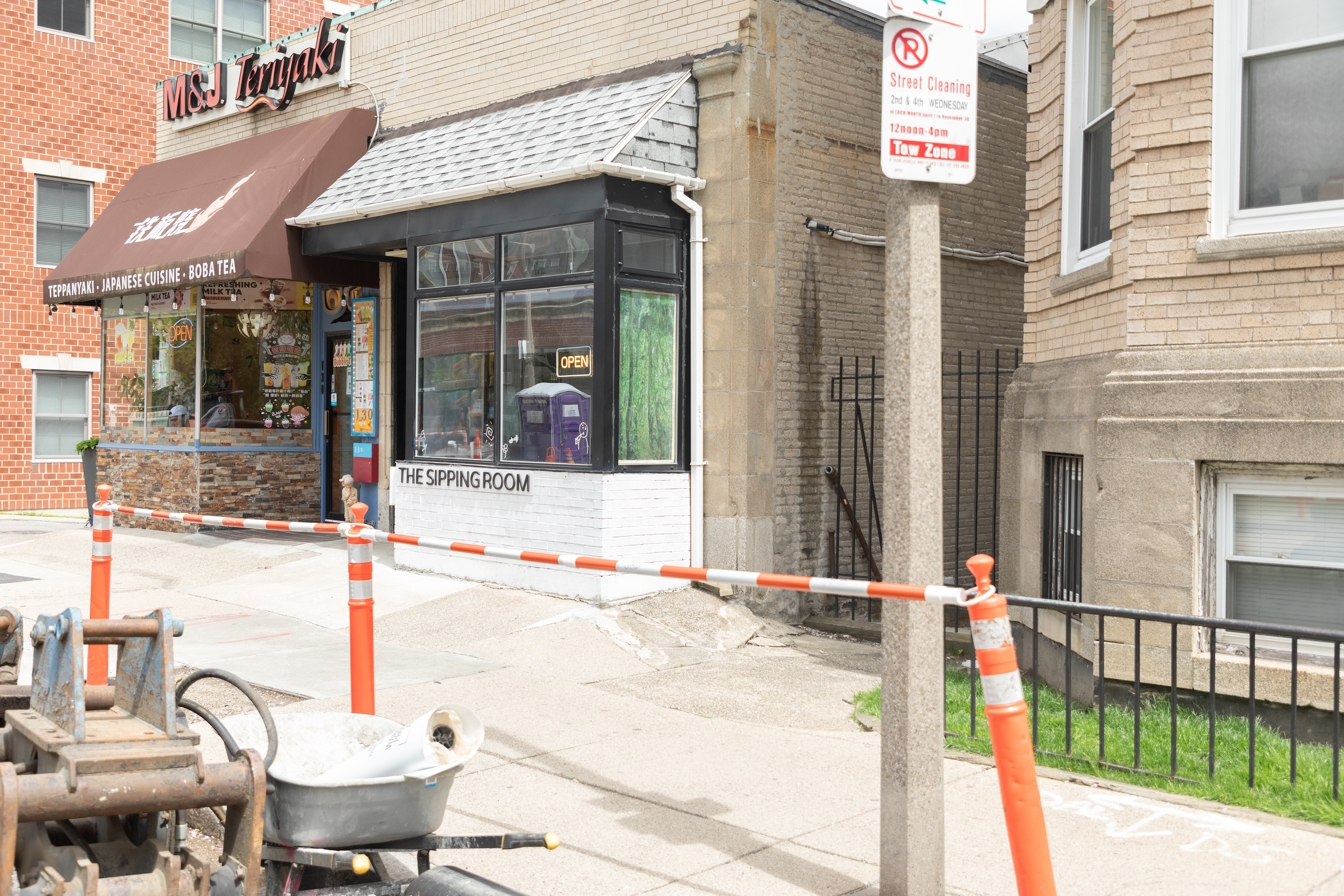
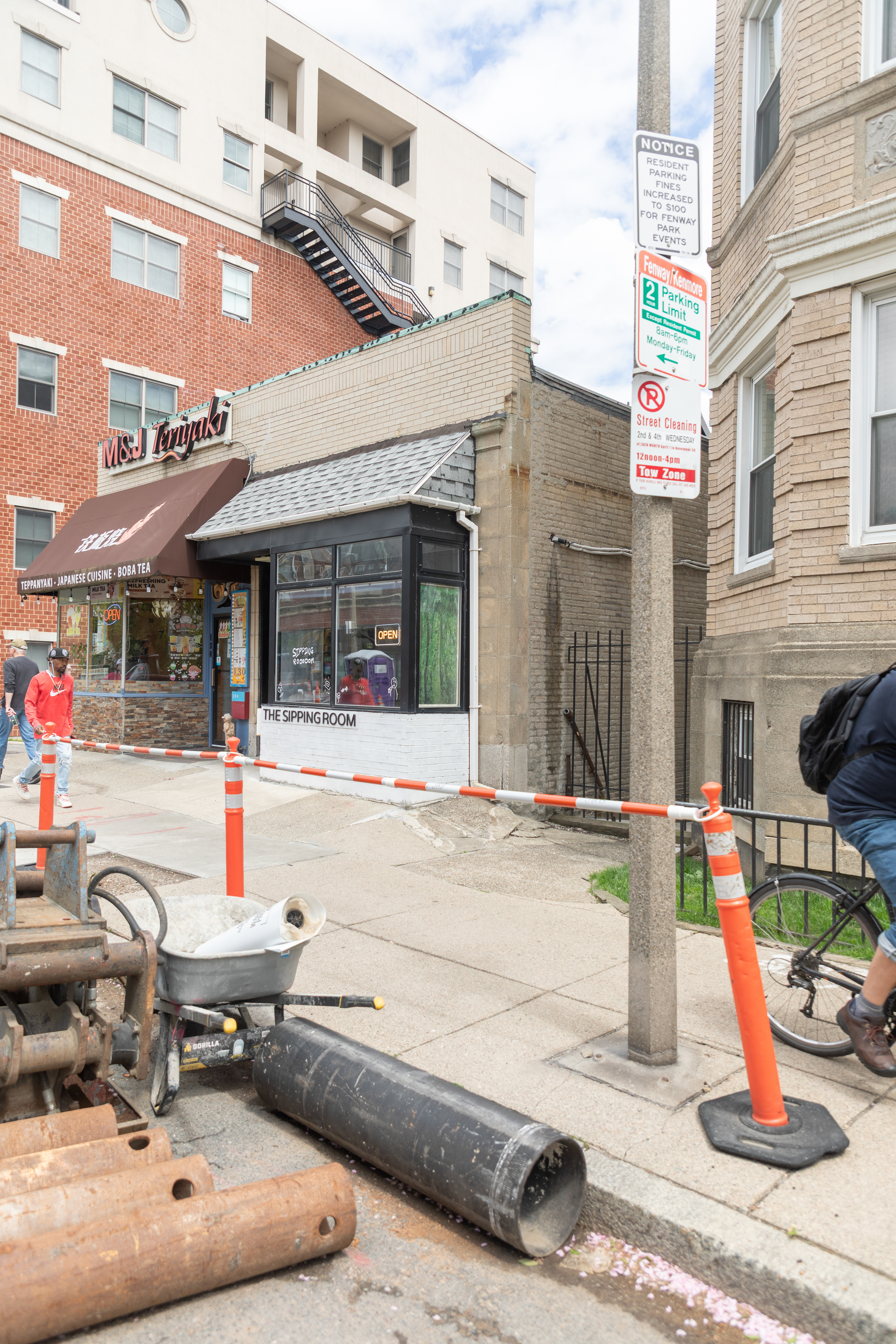
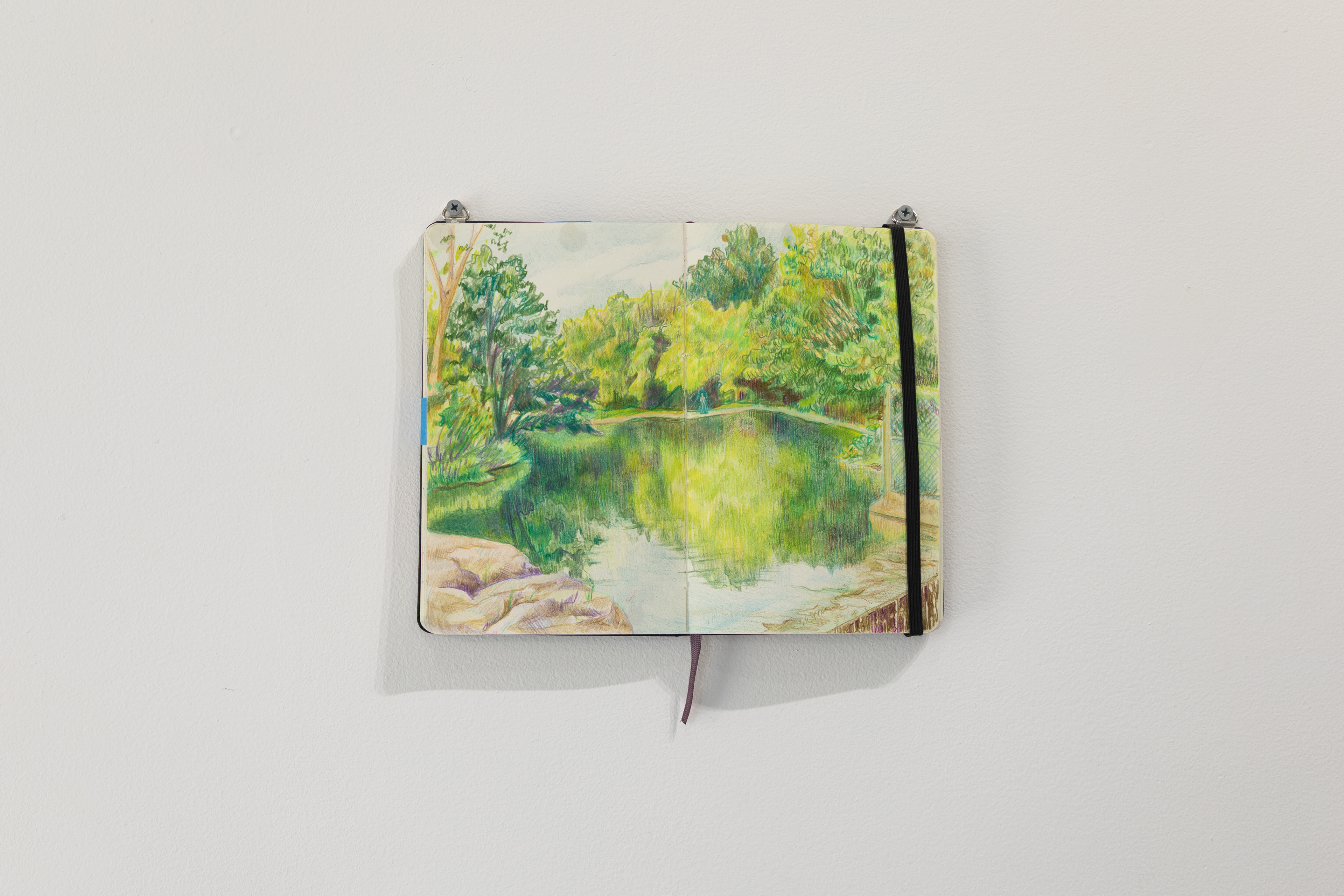
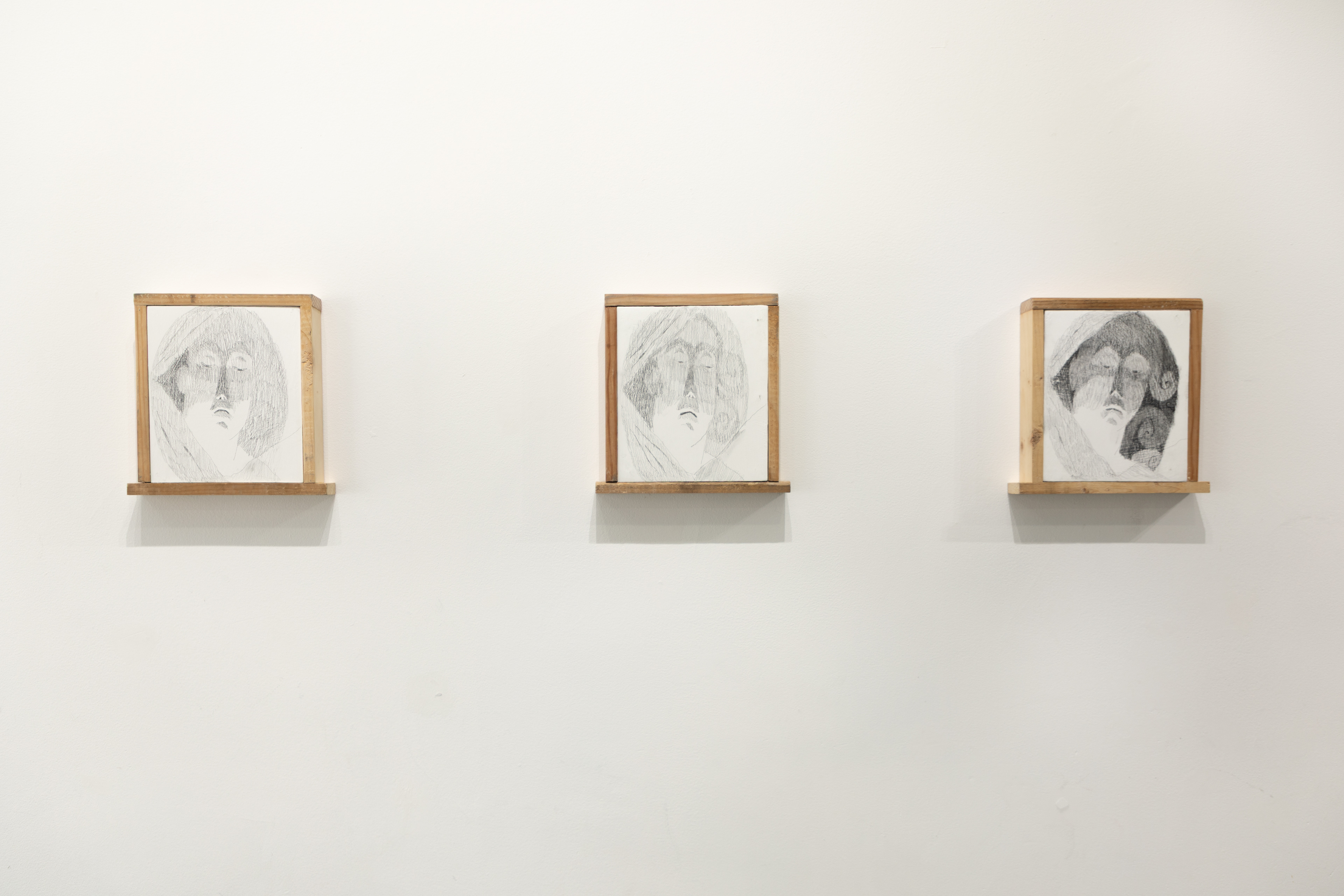
Miguel Caba, name Cai, Anneke Chan, Ava Chickering, An Hà, Ashley Jin, Wanjie Li, Matilda Love, Zelda Mayer, Becky Moon, Robbie Moser-Saito, August Sunseri, Vivian Tran, Hami Trinh
Lunch is a surprisingly recent invention. Like other standards of clock-time by which most of us live, one of its origins is in the factory, and it took solid shape as the industrial revolution unfurled. Sometime around the mid-19th century, the lunch break as we know it — one precious hour during the workday that we could call ours — came into being.
This show probes some of those questions of labor and leisure emerging from the history of lunch, particularly as they relate to art. What kinds of labor do artists perform? What kinds of labor go into making an artwork? And is there a difference?
Young artists are preoccupied with labor, and for good reason. Most of us will never make a decent living from our art, even though institutionalized art education has been designed to turn us into “professionals.” We want to sell our labor, but who’s buying? Many of us will find ourselves performing years of un(der)paid work, hoping that it might be temporary, merely the unsavory means by which we gain a foothold in an increasingly unequal art world. Take the hours of work we put into this show, for instance, however glad we were to part with them! Leigh Clare La Berge, professor of English at CUNY, has thus described artists’ labor, in a time when most artists bear little relation to anything resembling formal waged work, as “decommodified.”
Of course, not everything is subsumed by labor, and not all labor is the same. The author Garth Greenwell, for instance, thinks that the work of art-in-process should not be contaminated by that other work of “being an artist in the world”: “I believe in a firm line between the work of making art and the work of being an artist in the world, which includes the work of making a living as an artist,” he says. “I think that line is important. When writing, I think any thought that takes us away from the page toward its fate in the world is a distraction: a waste of time at best, something potentially quite destructive at worst. In an ideal world, agents and editors wouldn’t visit MFA programs, which would remain pure of professionalization, havens of art.” I take him to mean that the work of art, even the work of art in the age of professionalization and financialization, should be creative of a world unto itself. And it should still feel good to make — should still feel like leisure.
Artistic labor has long been self-reflexive, and there exists a rich history of artists not only thinking about but also depicting themselves at work. One of my favorites comes from Rouen Cathedral, famously serialized by Monét. Past its Gothic facade, hidden rather mischievously under its seats, are an extraordinary set of misericords depicting all manner of daily life in medieval Rouen. That includes the work of artists and carvers. At Rouen, mostly anonymous sculptors carved themselves making the very misericords that we now behold. The misericord-as-selfie, less remarked upon than canonical works of self-portraiture in the West, strikes me as a close cognate to what we are trying to do with this show.
That is: let us see labor, and let us see it more clearly. Let us see it as an application of transformative creativity. It is a simple and profound thing, something we all do, that which brings whole worlds into being.
— Wanjie Li